
If you’ve spent any time chasing lap time in sim racing, you’ve probably asked yourself the same question: what actually makes you faster?
Better wheel? Better rig? Better pedals?
After upgrading to a hydraulic setup using the THORP II system from Asetek, I went down that exact rabbit hole. What I found might surprise you—because this upgrade isn’t really about speed at all.
The Moment That Changed Everything
This whole journey didn’t start in sim racing—it started in a real car.
While driving at Homestead during an Extreme Experience track day, I was told something that stuck with me:
“Hit the brake harder.”
The problem? I thought I already was.
That disconnect between perceived braking force and actual braking force is what led me to hydraulic pedals. Real race cars—especially GT3 and GT4—require significantly more pressure than most sim setups replicate. And until you feel it, you don’t realize how far off traditional pedals can be.
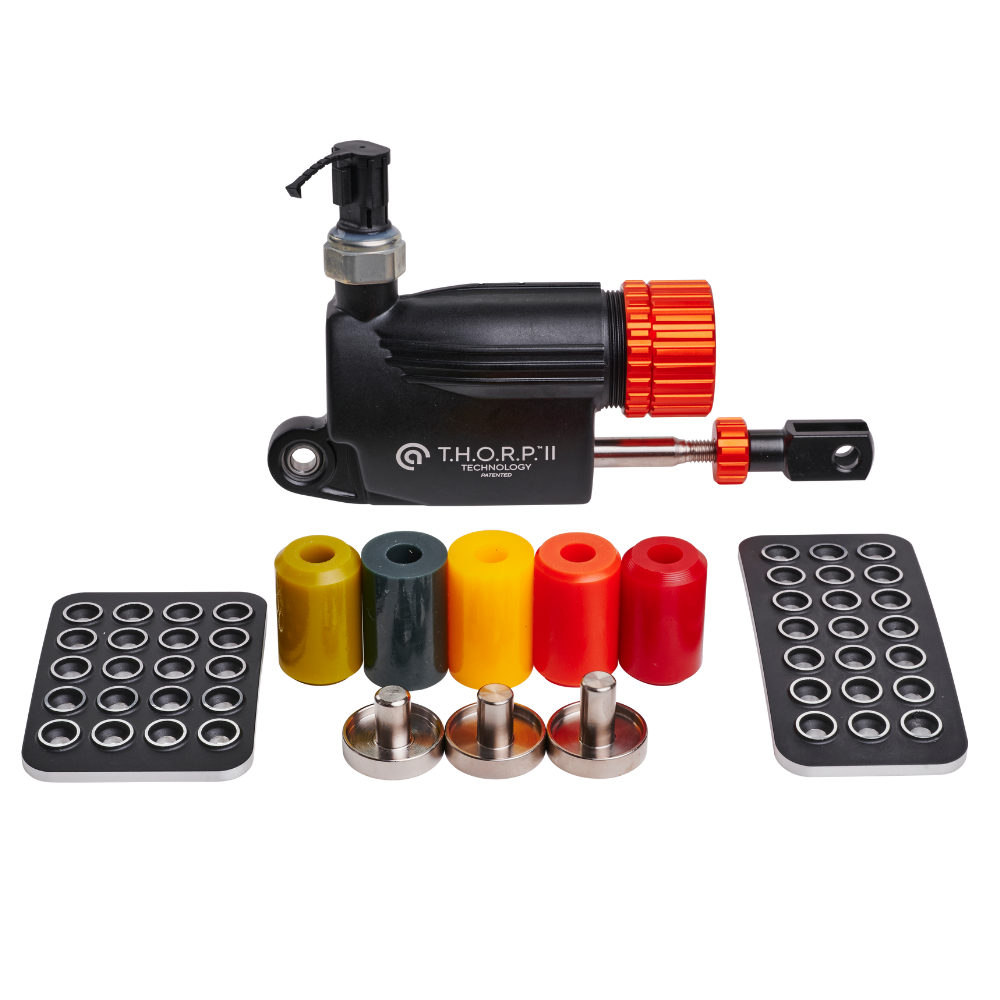
What Makes THORP II Different?
At its core, the THORP II system transforms your brake pedal into something far closer to a real hydraulic braking system.
Traditional Load Cell Pedals
- Measure pressure, but often rely on short travel + artificial resistance
- Many default to angle-based input curves (yes, really)
- Easy to hit 100% braking with minimal force
THORP II Hydraulic System
- Combines hydraulics + elastomer stack
- Creates a true two-stage braking feel
- Requires progressive force from ankle → full leg
The Two-Stage Feel (This Is Everything)
The biggest difference—and honestly the magic of this system—is the two-stage braking behavior.
Stage 1 (0–60%)
- Controlled mostly by your ankle
- Smooth, progressive input
- Perfect for trail braking and fine adjustments
Stage 2 (60–100%)
- Requires full leg engagement
- Significant pressure ramp-up
- Feels like compressing a real braking system under load
As described in the original testing:
“That last 30–40%… you really have to push it in. That’s where the hydraulic feeling comes alive.”
This is the closest I’ve felt in sim racing to what I experienced in a real Porsche on track.
The Tradeoff: Does It Make You Faster?
Let’s answer the question everyone cares about:
❌ No — it will NOT make you faster
⚠️ It might actually make you slower (at first)
Why?
- Requires more physical effort
- Adds cognitive load (you’re thinking about force, not just input)
- Slows down reaction time compared to lighter pedals
If your only goal is lap time, a softer load cell setup may actually be more efficient.
So Why Buy It?
Because this is where hydraulic pedals absolutely dominate:
1. Realism & Immersion
This is the closest you’ll get to real braking feel without being in an actual race car.
- You feel pressure build-up
- You feel resistance changes
- You respect braking zones more
2. Training Transfer
If you:
- Drive real cars
- Plan to track your car
- Or want realistic muscle memory
This is a huge upgrade.
3. Physical Engagement
You’re no longer just “pressing a pedal”—you’re:
- Using your quad
- Managing force curves
- Controlling release under load
It becomes a full-body input, not just a foot tap.
The Downsides (That Nobody Talks About)
1. Rig Flex Is Real
If your rig isn’t rock solid, you will feel it.
- Tubular rigs, such as the TR8 Pro original base plate flex under load
- Base plates can bend under load
- Asetek themselves recommend mounting across two crossbars
If you ignore this, you’re leaving performance (and realism) on the table.
2. Knee & Leg Pain
This one is big—and often overlooked.
Hydraulic pedals:
- Require significantly more force
- Can cause knee strain, especially on the inner joint
Fixes that worked:
- Offset pedals to align with your natural leg position
- Reduce elastomer stiffness
- Remove clutch for better positioning (if needed)
3. It’s Physically Demanding
After longer sessions, you’ll notice:
- Leg fatigue
- Reduced consistency if you’re tired
- Higher physical demand than traditional setups
This is a feature… but also a cost.
The Sweet Spot: Where THORP II Fits
Here’s how I’d break it down:
| Setup Type | Price Range | Best For |
|---|---|---|
| Entry Load Cell | $200–$400 | Pure lap time & ease of use |
| Mid-Tier (Forte) | $400–$800 | Balance of control + comfort |
| Hydraulic (THORP II) | $600–$1,000+ | Realism & training |
| Active Pedals | $1,500–$2,000+ | Ultimate customization |
If you’re chasing:
- Speed → stay lighter
- Immersion → go hydraulic
How to Take It to the Next Level
Hydraulics alone aren’t the full story.
To really unlock immersion, you need:
Haptics / Feedback
- ABS vibration
- Traction control feedback
- Road texture
In real driving, you feel the car through your feet. Adding:
- Pedal haptics
- Or a bass shaker (ButtKicker-style)
…closes that gap dramatically.
Final Verdict
Should you buy the THORP II?
✅ YES — if you want:
- Maximum realism
- Real-world driving carryover
- A deeper, more physical sim experience
❌ NO — if you want:
- Faster lap times
- Easier consistency
- Less physical effort
The Bottom Line
The THORP II hydraulic system from Asetek doesn’t make you faster.
It makes you feel everything.
And in doing so, it completely changes how you understand braking—not just in sim racing, but in real driving too.